






MANUFACTURING
2026/08/27
[Part 1] Nikkiso Vietnam, Inc. is expanding its product range from engine nacelle parts to wing and fuselage components
- Aerospace
- CFRP
- Interview
- Aircraft
![[Part 1] Nikkiso Vietnam, Inc. is expanding its product range from engine nacelle parts to wing and fuselage components](/media/AVpbAdwaYtg0TEFKF4kBsPQdrX3E7sbCU8GYJkq4.jpg)
Index
The core product of Nikkiso’s Aerospace Division is Cascade for engine thrust reversers. We have been rapidly expanding our product lineup and are now manufacturing a wide range of products from engine nacelle parts to wing and fuselage parts. A driving force behind this expansion has been Nikkiso Vietnam, Inc. (NVI), which operates two factories near Hanoi, Vietnam.
NVI now produces approximately 250 different products. In this two-part series, we explore NVI’s energetic approach to the ongoing challenge of new product development, from both Japanese and Vietnamese perspectives. In the first part, Kazuya Osaki, Deputy General Manager of the Aerospace Division, and Yoshiyuki Waki, NVI Factory Manager, explain why NVI is increasing its presence in the aircraft industry, taking into account the market environment.
Even for customer-designed products, the key to quality is in Nikkiso’s hands
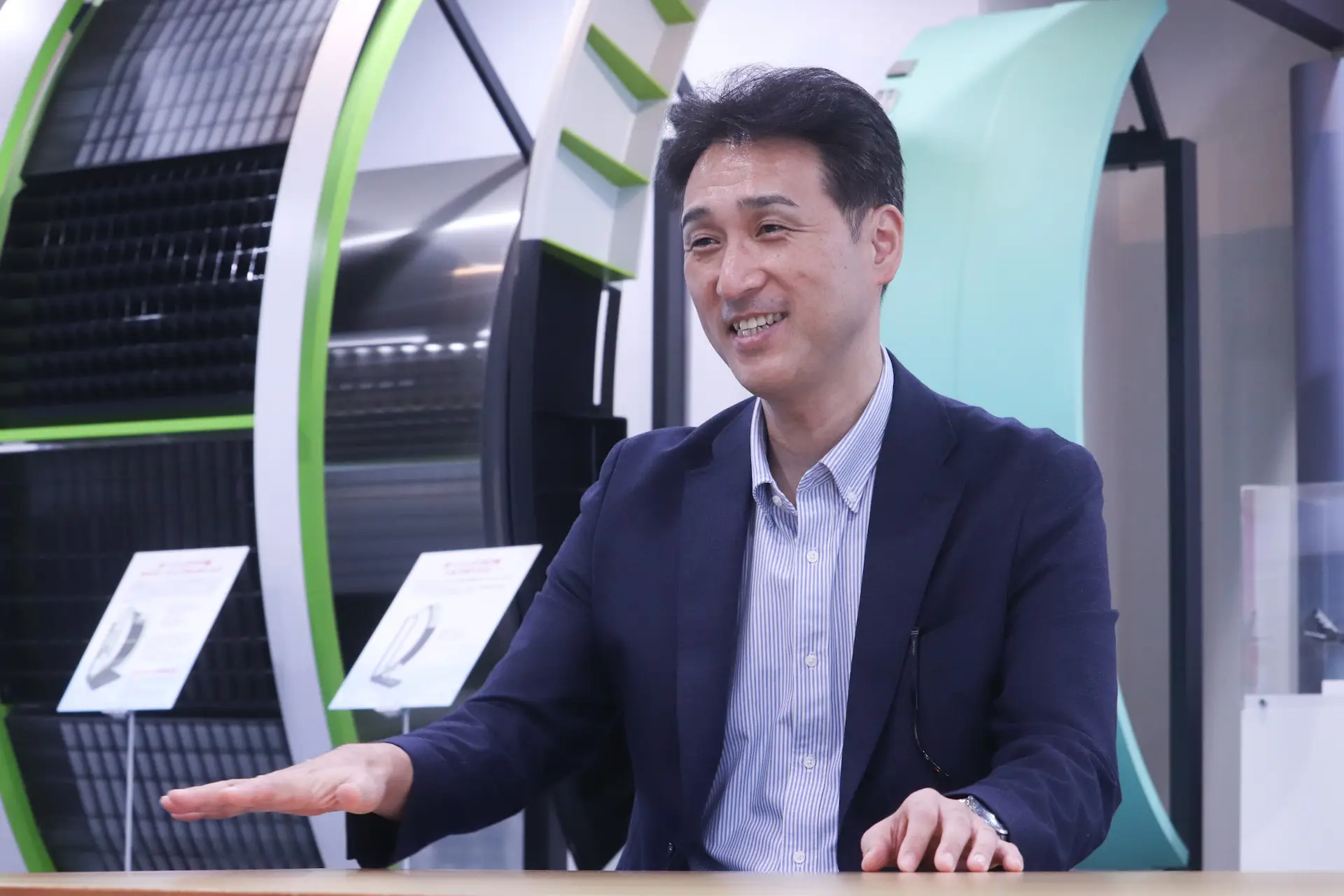 Deputy General Manager Osaki (current President of NVI)
— First of all, tell us about how the company decided to set up factories in Vietnam.
Osaki: We have grown with Cascade—aircraft components of our own design—as our core product, but in order to further expand our business, we needed to increase the variety of our products. This led to the establishment of a factory with the aim of expanding the product lineup by undertaking the manufacture of parts designed by customers themselves, such as aircraft manufacturers and engine manufacturers.
There were several overseas candidates, but we finally decided on this location for the factory because our medical business already owned a factory in Ho Chi Minh City, Vietnam, and we had extensive experience working with Vietnamese people. NVI opened in 2010.
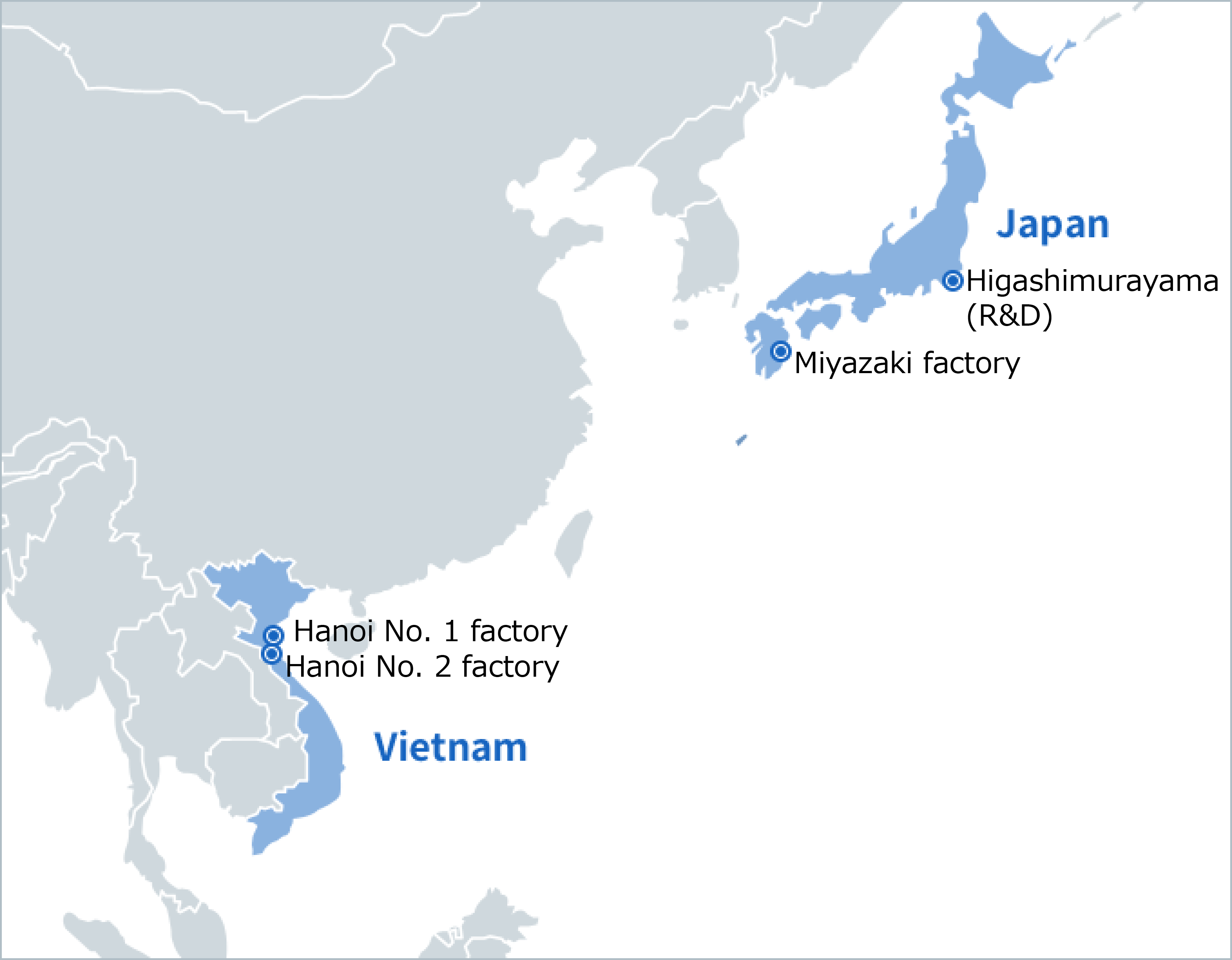 Aerospace Business Production and Development Structure
— What were some of the actual benefits of setting up a factory in Vietnam?
Osaki: Asia is attracting attention in the global economy, and customers are tending to consolidate their suppliers in Asia. By consolidating supply chains that were scattered around the world in Asia, the cost of transporting parts can be greatly reduced. In fact, there were cases in which parts manufactured in a U.S. factory were transferred to NVI, and the inefficient supply chain of (U.S.) => (two Asian countries) => (U.S.) was streamlined to (NVI = Vietnam) => (two Asian countries) => (U.S.).
In the midst of these global economic trends, having a factory in Vietnam is a great advantage.
<<Topic: Asian markets are expected to grow in the future>>
Aircraft manufacturer Boeing announced in June 2023 that the demand for civilian aircraft through 2042 is projected to be 42,600 new aircraft. The Asia-Pacific region accounts for more than 40% of this global demand. Asia is expected to remain a growth market.
— What are some of the products manufactured by NVI?
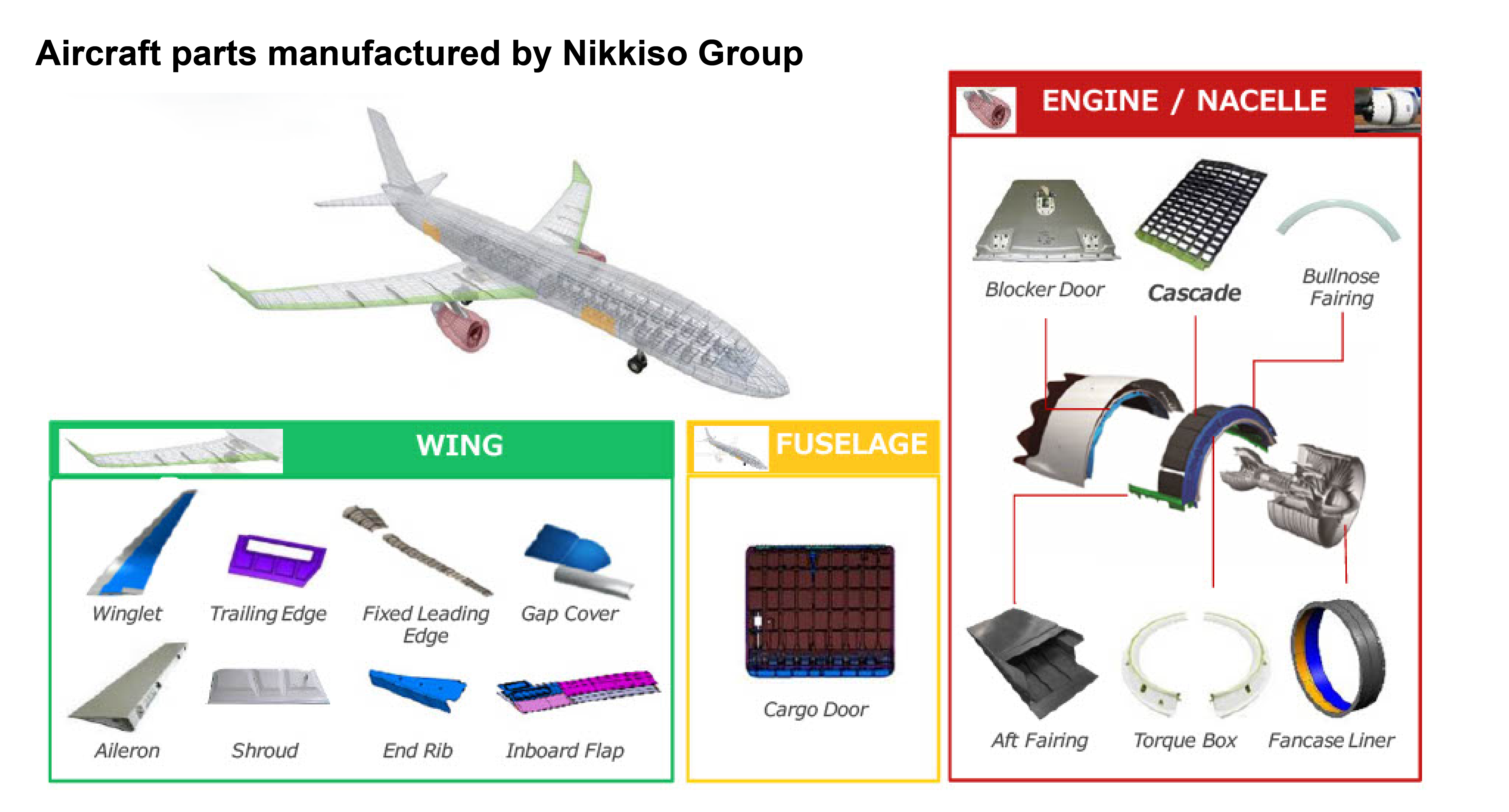
Osaki: Such products include Blocker Door, which are a part of the engine thrust reverser and which block and reverse engine airflow during landing; torque boxes that are the foundation for mounting Cascade ; Ailerons, which are movable wing surfaces that tilt the airplane; and Cargo Doors through which cargo is moved in and out of the fuselage.
All of these, just like the Cascade, use Carbon Fiber Reinforced Plastic (CFRP), which is strong and lightweight. The Cascade is a component with a fairly complex structure, so we receive orders from customers who rely on our technical capabilities, saying, “If you can manufacture a Cascade from CFRP, maybe you can also do this?” The high quality and on-time delivery track record of the products also pushes customers to have high expectations of NVI.
The Blocker Door, which were the first to be made in Vietnam, also employ materials not used in Cascade, such as metals and honeycomb cores. The increase in the number of materials that we are able to successfully work with is also a factor in the expansion of our product lineup. Thus, we have expanded the range of parts we manufacture to include engine nacelles, wings, fuselages, ....
Aircraft parts manufactured by Nikkiso Group
— Was it a difficult task to transfer the technology that was originally in Japan to Vietnam?
Osaki: It was difficult. To manufacture Blocker Door, we first invited Vietnamese engineers to Japan to establish the work process and train them in Japan, and then began production in Vietnam. The next process we worked on, torque boxes, was also first established in Japan, and was later started up in Vietnam. This goes to show how much NVI’s capabilities have improved.
— Are there any difficulties in manufacturing parts designed by the customer?
Osaki: Yes, there are. When manufacturing a component designed by a customer, the requirements of the product drawings and specifications must be met. The specs may say, for example, bake and harden at so many degrees (°C) for so many minutes. However, not all the specifics of how to do the work will be written down, such as what jigs (tools for manufacturing the product) to use, what to watch out for, and how to do the operations. The detailed manufacturing process is left up to the supplier, and whether a good product is produced depends on the supplier’s manufacturing know-how. We call the process of setting up our own manufacturing process at Nikkiso while following such specification requirements “process establishment”.
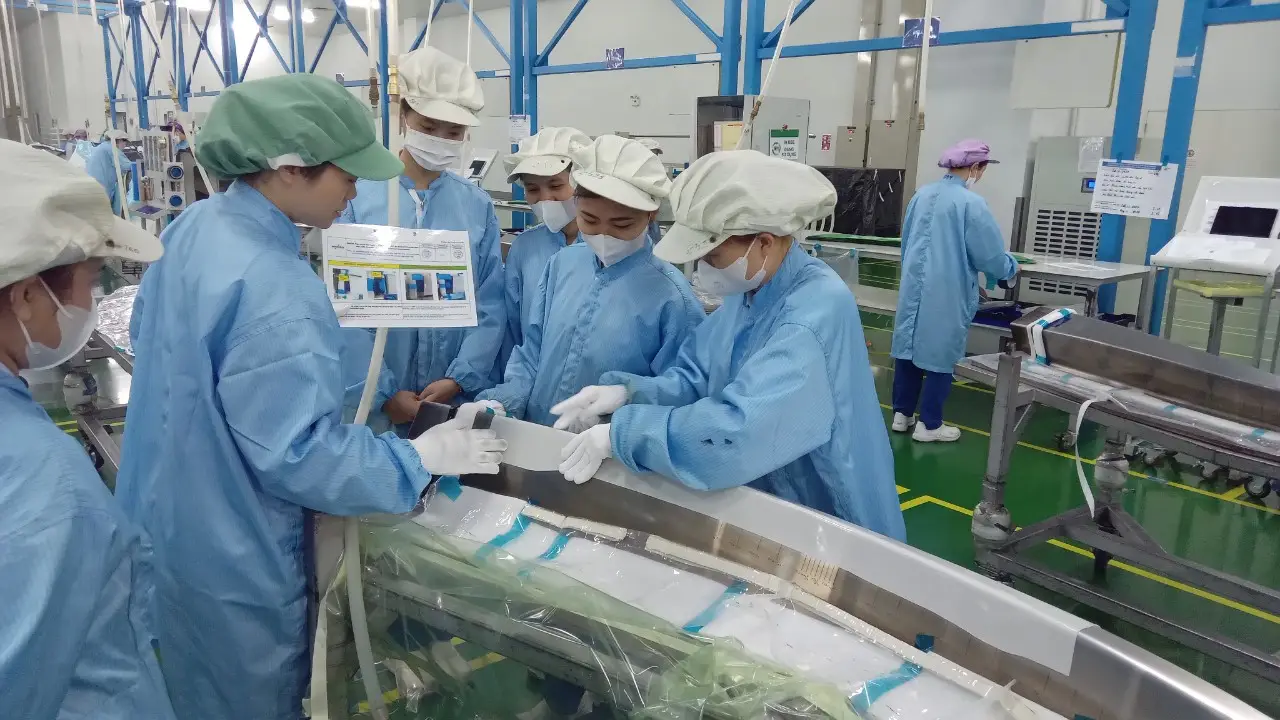
Once the process has been established, there is an event where the quality of the product is checked in the presence of the customer. We check in detail whether the dimensions are as required, whether there are any internal defects, whether the quality is stable, and so on. So customers can expect this kind of rigorous inspection.
Inevitably, however, it can be difficult to manufacture products that meet all the requirements. We try to do so as much as possible, but sometimes problems exist with the drawings in the first place. In such cases, we will carefully explain the reasons and request that the requirements be relaxed or suggest a different approach. If these suggestions are not implemented, and mass production begins, a large number of non-conforming products will be produced, and the business will become unsustainable.
— Without the trust of customers, they won’t accept such suggestions?
Osaki: Well, I think it is the other way around. We need to communicate sincerely and openly what we cannot do. Then, propose alternatives one by one. I believe that only by doing so can trust be created. I think this is a natural thing for a manufacturer to do. However, it is not an easy task, as we try various possibilities and come up with creative solutions before deciding that a job is not feasible. I take pride in the fact that we can do this precisely because of our technical expertise and experience.
Three strengths — geopolitical advantage, national character, and organizational capacity
We now turn to Factory Manager Yoshiyuki Waki, who currently heads NVI’s factory.
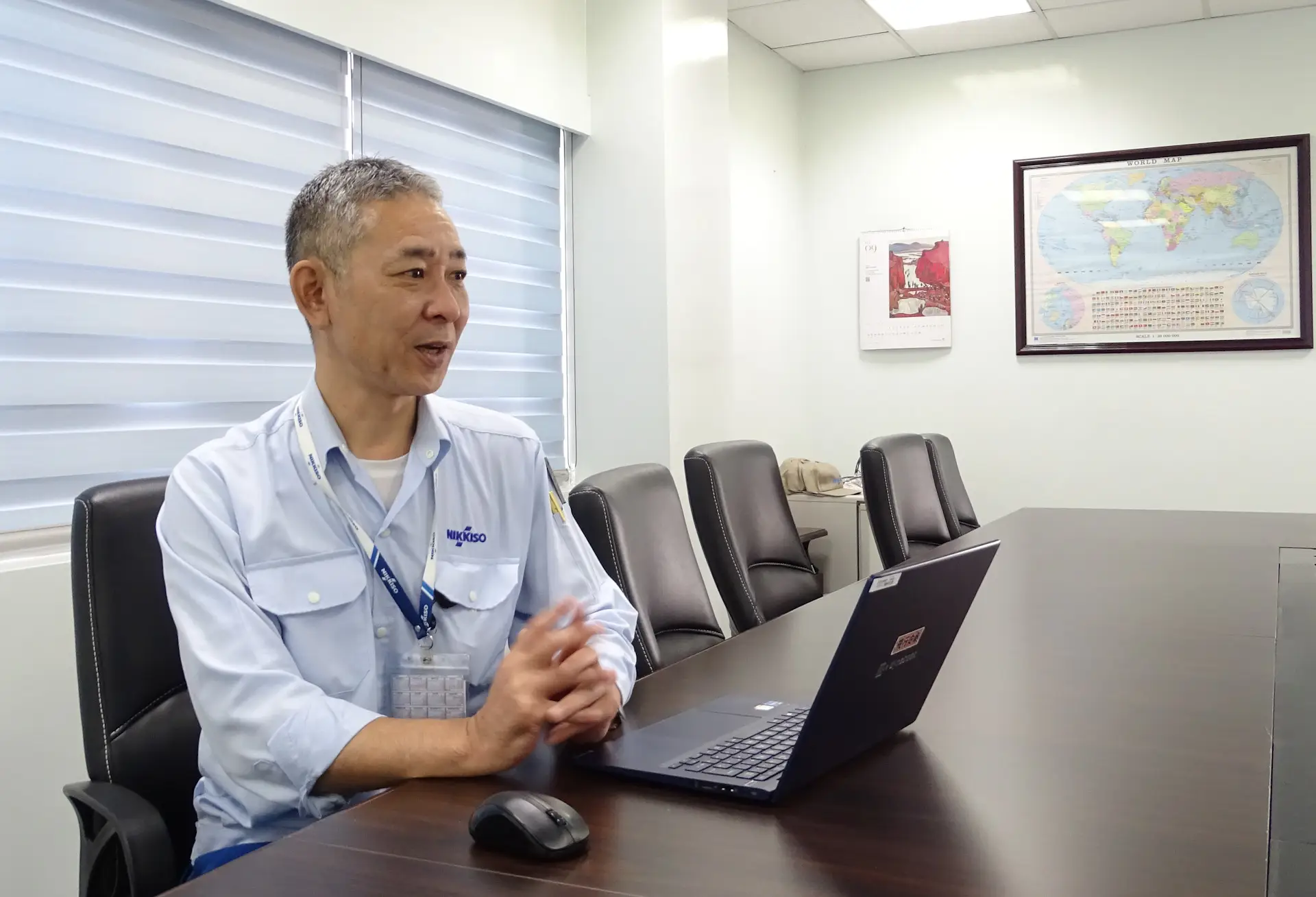 Factory Manager Waki (current General Manager of the Aerospace Research & Technology Center)
— What products have you been manufacturing most recently? Waki: At present, NVI manufactures a total of about 250 different parts, counting all the detailed differences in specifications for each aircraft model. Among these, we are currently working on the first shipment of components for the Airbus A220. The A220 is a small aircraft in the 100–160 seat class and is used primarily for domestic and short-haul international flights. Small aircraft such as the A220 are driving the recovery in demand for aircraft, which declined due to COVID-19, and Airbus turned to NVI as a supplier that could handle the increase in production that would accompany the recovery in demand.
— What are the strengths of NVI?
Waki: I think there are three.
One is geopolitical strength. Vietnam, where NVI is located, is experiencing economic growth, but its railroad network is not well developed for its large land area from north to south. As a result, air travel is common, and demand for aircraft is expected to grow even more in the future.
For example, when Airbus or Boeing is trying to get the government-owned Vietnam Airlines to buy their aircraft, “Our planes use parts made in Vietnam” is a powerful sales pitch. This is because it allows them to highlight the wide-ranging economic benefits: “If you buy our products, it will help revitalize the Vietnamese economy.” If you want to make composite products in Vietnam, look no further than NVI. That’s why aircraft manufacturers want to produce their parts at NVI.
Another is the earnestness of the Vietnamese people. I was assigned to NVI two years ago, and every day I find that the Vietnamese staff do what they are assigned to do well. So they are very trustworthy partners. Customers who visit NVI are amazed. I believe that this seriousness gives customers a sense of security, especially in the aircraft industry, where quality is maintained through a strict certification system.
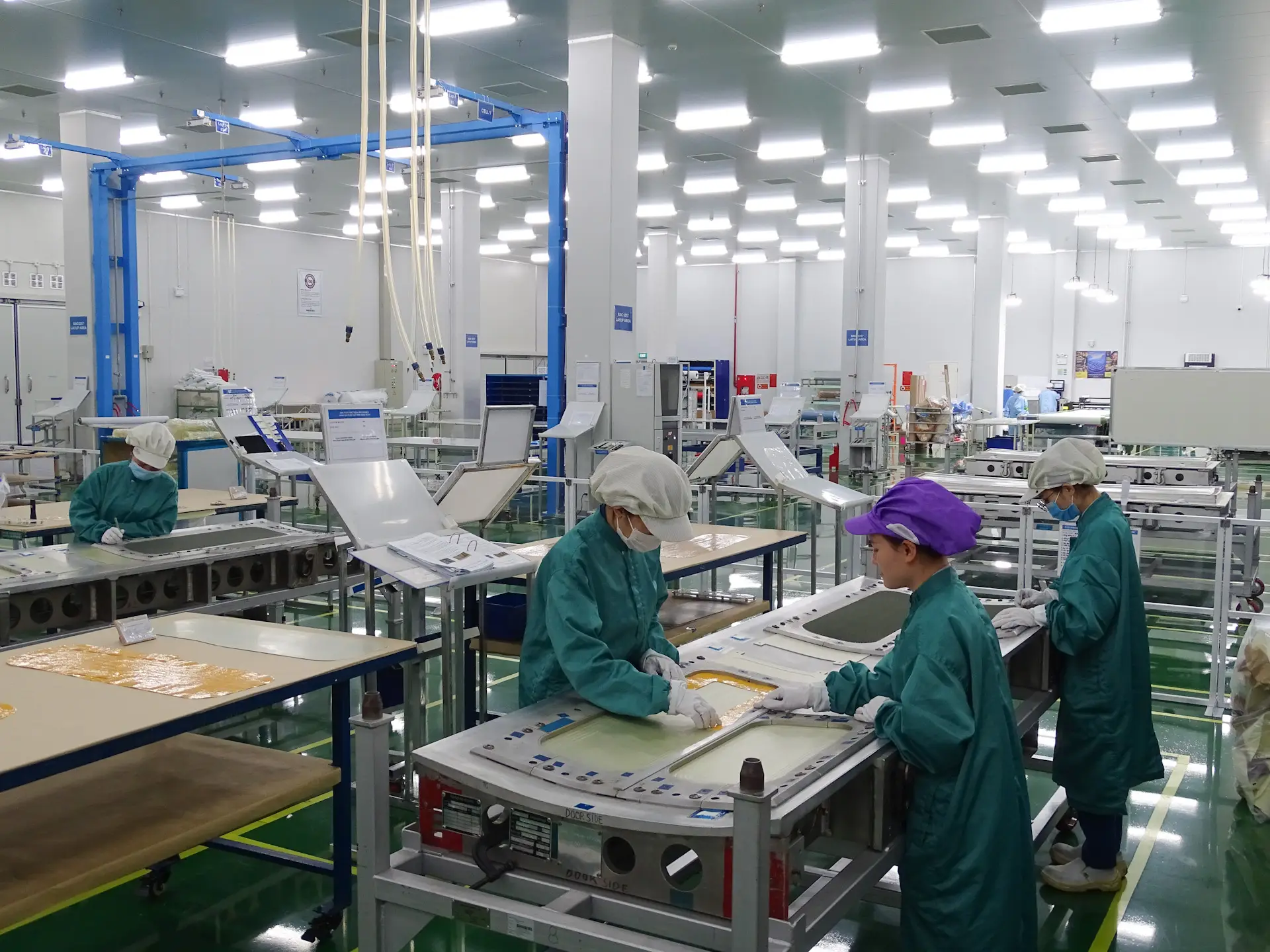
The third point is the organizational capacity of NVI. We work closely with Nikkiso Japan, from which we receive technical assistance, and work under the beneficial discipline that comes from Nikkiso’s governance. At the same time, we have had Vietnamese people join the local management, and we have been able to build a good, equal relationship between the Japanese and Vietnamese personnel.
Leveraging two factories with high quality and mass production capability to increase orders
— I understand that NVI has won orders from Airbus as a supplier that can handle increased production. Why is NVI receiving more orders?
Waki: NVI currently has two factories. Our first factory in Vietnam (total floor space: approx. 29,500 m²) began operations in 2011, but it reached full capacity and we were no longer able to accept work from customers. For this reason, a second factory in Vietnam (total floor area: approx. 35,500 m²) was built and started operation in 2018.
However, shortly after, the COVID-19 pandemic occurred, and aircraft production was halted worldwide. The second factory also went through a period where we could not increase the utilization rate as we had wanted. 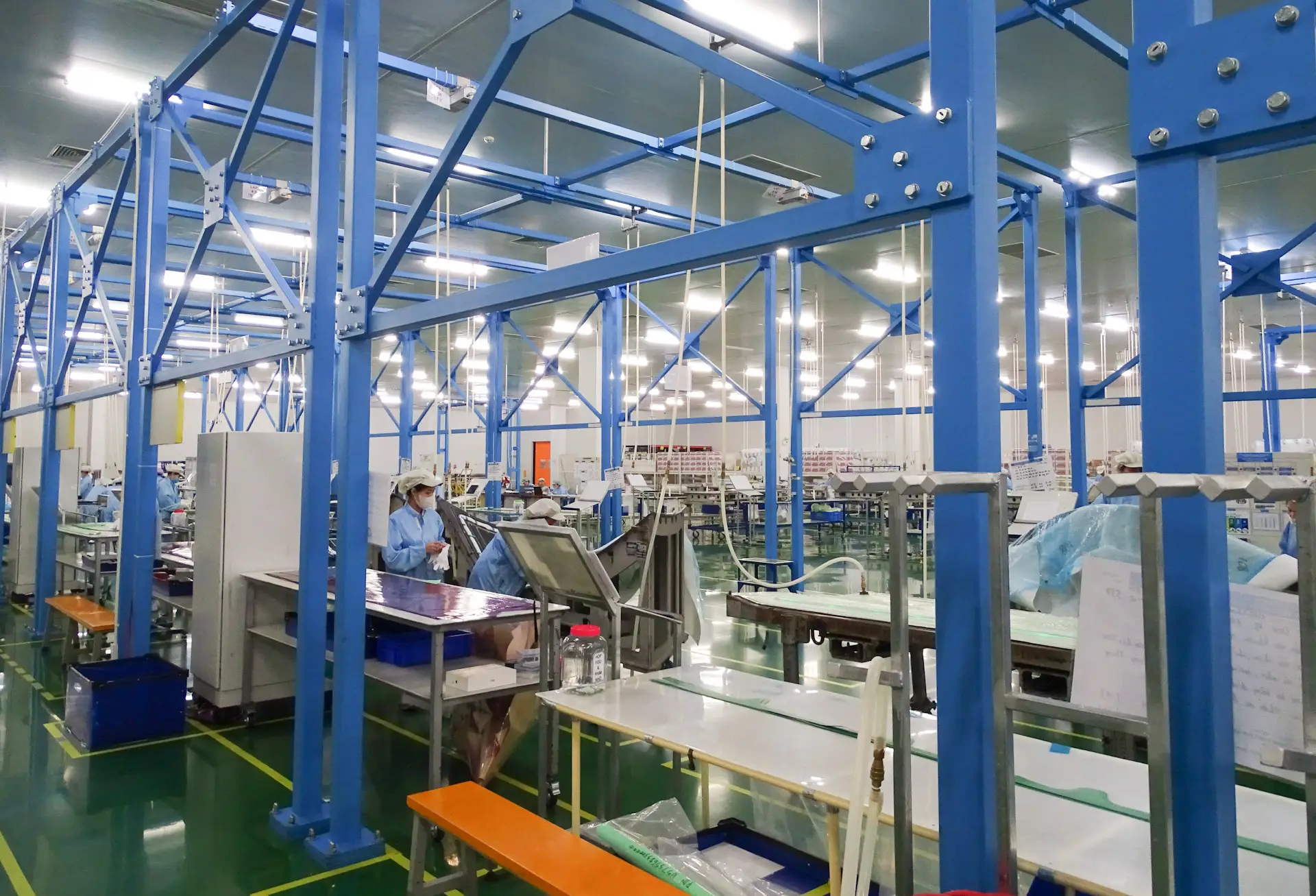
Now that COVID-19 has subsided and aviation demand has returned, aircraft manufacturers are looking to increase the pace of aircraft production, but the global supply chain was hit hard by COVID-19 and production has not picked up as much as was expected. Under such circumstances, aircraft manufacturers looking for a new supplier that can provide high quality and mass production are turning to NVI, which has spare capacity in its second factory.
(In the second part, we will hear from factory manager Yoshiyuki Waki and three Vietnamese managers about on-site kaizen activities and initiatives that have made multi-product manufacturing possible.)
この記事をシェアする



Pickup
-
 MANUFACTURING
From Cascades, an area where Nikkiso has a global share of over 90%, to eVTOL components. The Nikkiso Miyazaki Aerospace Factory’s insatiable quest for air mobility
- Aerospace
- eVTOL
- Miyazaki
- CFRP
- Interview
- Aircraft
2026/09/10
-
![[Part 2] Nikkiso Vietnam, Inc. is expanding its product range from engine nacelle parts to wing and fuselage components](/media/FUvRilkmaaM2sm9uDeXK0jRNEocewdSV4LQNW5BJ.jpg) MANUFACTURING
MANUFACTURING
[Part 2] Nikkiso Vietnam, Inc. is expanding its product range from engine nacelle parts to wing and fuselage components
- Aerospace
- Aircraft
- CFRP
- Interview
2026/08/28
-
 MEDICAL FIELD
What is Green Dialysis? Achieving Sustainable Dialysis Treatment through Industry-Academia Collaboration
- Hemodialysis
- Interview
- Medicalbusiness
2026/08/25
関連記事
-
MANUFACTURING
From Cascades, an area where Nikkiso has a global share of over 90%, to eVTOL components. The Nikkiso Miyazaki Aerospace Factory’s insatiable quest for air mobility
- Aerospace
- eVTOL
- Miyazaki
- CFRP
- Interview
- Aircraft
2026/09/10
-
MANUFACTURING
[Part 2] Nikkiso Vietnam, Inc. is expanding its product range from engine nacelle parts to wing and fuselage components
- Aerospace
- Aircraft
- CFRP
- Interview
2026/08/28
-
 MANUFACTURING
Pumps also actively used in semiconductor manufacturing: 20 years of history of compact, high-speed canned motor pumps
- Technology
- Interview
- Pump
- Semiconductor
2025/05/21
-
 MANUFACTURING
Nikkiso's DX initiatives: CAE Support Department continues to evolve, aiming to eliminate dependence on the skills and expertise of specific people
- Technology
- Interview
2025/04/09
PICK UP
-
From Cascades, an area where Nikkiso has a global share of over 90%, to eVTOL components. The Nikkiso Miyazaki Aerospace Factory’s insatiable quest for air mobility
-
[Part 2] Nikkiso Vietnam, Inc. is expanding its product range from engine nacelle parts to wing and fuselage components
-
[Part 1] Nikkiso Vietnam, Inc. is expanding its product range from engine nacelle parts to wing and fuselage components
-
What is Green Dialysis? Achieving Sustainable Dialysis Treatment through Industry-Academia Collaboration
-
Empowering Asia’s Expanding Dialysis Treatment with Nikkiso’s Advanced Technology and Comprehensive Support